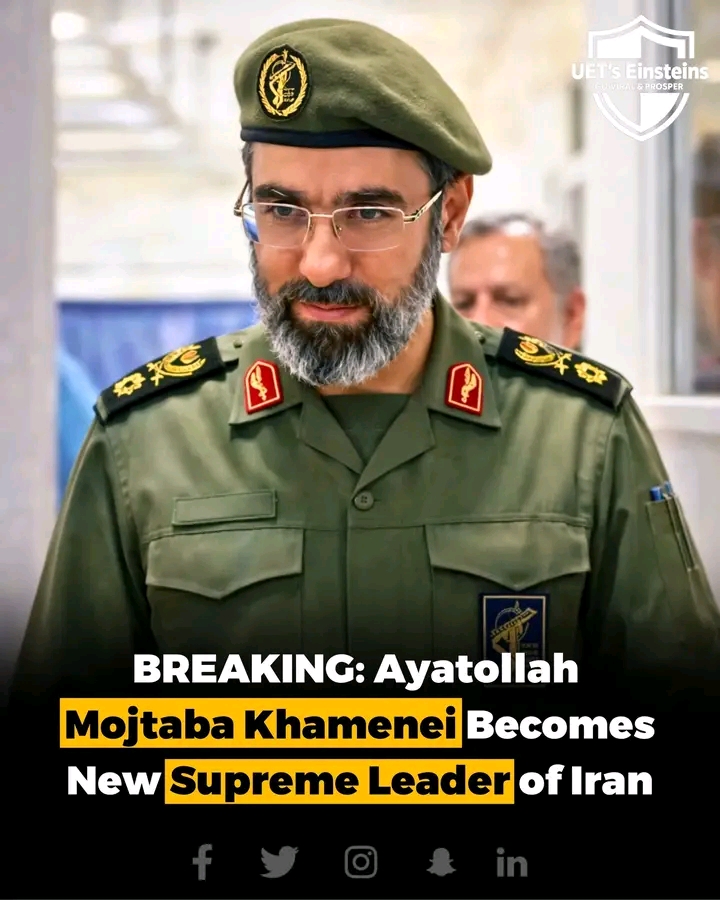

The decision was made during an extraordinary session of the Assembly following the death of longtime leader Ali Khamenei, who had ruled the country for more than three decades. The council, composed of senior Islamic scholars responsible for selecting Iran’s top authority, confirmed that Mojtaba received a decisive vote from its members to become the third Supreme Leader since the 1979 Islamic Revolution.
Historic and Controversial Succession
The appointment is particularly notable because Mojtaba Khamenei is the son of the former supreme leader. Iran’s political system has traditionally rejected hereditary leadership following the overthrow of the monarchy in 1979. However, Mojtaba had long been viewed as a potential successor due to his strong influence within Iran’s conservative religious establishment and his close ties to the Islamic Revolutionary Guard Corps (IRGC).
At 56 years old, Mojtaba has spent much of his career behind the scenes rather than in public office. Analysts say he played an important role in Iranian political circles and maintained close relationships with security and military institutions that hold significant power in the country.
Rapid Support from Iran’s Military
Shortly after the announcement, the IRGC publicly pledged loyalty to the new leader, signaling institutional support from one of the most powerful forces in the country. The statement emphasized that the military organization would fully follow Mojtaba Khamenei’s guidance as Iran navigates ongoing regional tensions and internal challenges.
Rising Tensions at Home and Abroad
The leadership change comes at a highly sensitive moment for Iran, with ongoing conflict in the region and heightened tensions with Western nations. Some international observers and political leaders have criticized the succession, arguing it resembles dynastic rule rather than a purely religious selection process.
Inside Iran, reactions appear mixed. While the government’s core institutions have expressed support, reports indicate that some citizens and critics of the regime have raised concerns about the concentration of power within the same family.
What Comes Next
As the new Supreme Leader, Mojtaba Khamenei now holds ultimate authority over Iran’s military, judiciary, media, and key state institutions. His leadership will shape the country’s domestic policies and its response to escalating geopolitical tensions in the Middle East.
The coming weeks are expected to reveal how firmly he consolidates power and whether his leadership signals continuity with his father’s policies or the beginning of a new phase in Iran’s political direction.