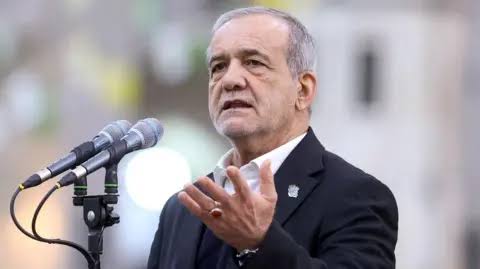
Iran’s president, Masoud Pezeshkian, has delivered a dramatic televised address to the nation amid intensifying conflict involving Iran, Israel, and the United States. The speech comes at a critical moment in the war as global attention focuses on whether Tehran might surrender following escalating military pressure.
In his national address, Pezeshkian firmly rejected calls for Iran to surrender, declaring that the country would never accept “unconditional surrender” demanded by U.S. President Donald Trump. The Iranian leader said those hoping Iran would capitulate would “take that dream to their graves,” signaling that Tehran intends to continue resisting despite the mounting conflict.
The war entered a new phase after U.S. and Israeli strikes targeted Iranian military infrastructure and leadership, including the killing of Iran’s Supreme Leader Ali Khamenei in late February. The attack triggered a wave of retaliatory missile and drone strikes by Iran against Israeli targets and U.S.-linked facilities across the region.
However, in a notable shift during his speech, Pezeshkian also attempted to ease tensions with neighboring countries in the Gulf. He issued a rare apology to regional states affected by Iranian strikes and announced that Iran would halt attacks on neighboring nations unless they directly launch attacks against Iranian territory.
The Iranian president emphasized that the country’s fight is directed at those participating in the conflict against Iran, not at regional neighbors. According to officials, the interim leadership council in Tehran approved a new policy aimed at preventing further escalation with nearby states.
Meanwhile, Washington has maintained its hardline stance. President Trump has repeatedly insisted that the only acceptable outcome for Iran would be “unconditional surrender,” warning that military pressure could intensify if Tehran refuses to comply.
As the conflict continues to spread across the Middle East, global markets, air travel, and oil supplies have already been disrupted. Casualty numbers are rising on multiple sides, and international leaders are increasingly calling for diplomatic intervention before the situation spirals into a wider regional war.
For now, Iran’s leadership appears determined to stand firm. Pezeshkian concluded his address by insisting that the Iranian people will defend their sovereignty, making it clear that surrender is not currently on the table despite the growing pressure from the United States and its allies.