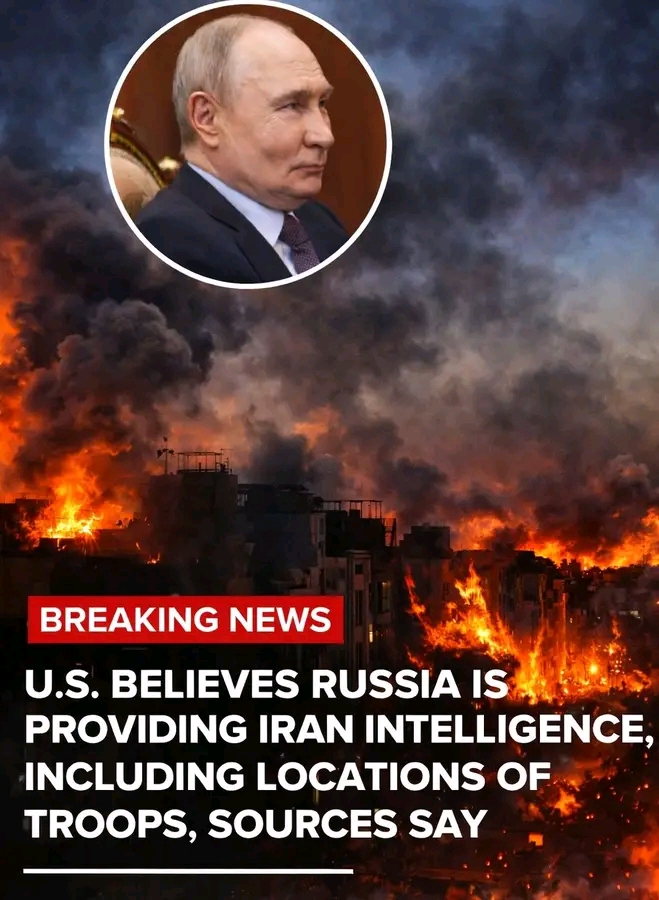
Tensions in the Middle East have intensified after U.S. intelligence officials revealed that Russia may be providing Iran with sensitive intelligence about the locations of American military forces in the region. The alleged intelligence sharing includes information about U.S. troops, warships, aircraft, and other strategic assets, according to sources familiar with the matter.
The development comes amid an escalating conflict involving the United States, Israel, and Iran, with missile strikes, drone attacks, and military operations unfolding across several countries in the Middle East. American officials say the intelligence provided by Russia could potentially help Iran identify and track U.S. military positions, increasing the risk to American service members stationed in the region.
Intelligence Sharing Raises Alarm
According to multiple U.S. officials who spoke anonymously due to the sensitivity of the intelligence, Moscow has reportedly passed targeting information to Tehran since the start of the latest round of fighting. The data allegedly includes the locations of American warships, aircraft, and other military infrastructure operating in and around the Persian Gulf.
Experts warn that such intelligence could significantly improve Iran’s ability to launch more precise missile or drone strikes against U.S. positions. Iran has already carried out several attacks on American-linked targets in recent days as the conflict intensifies.
However, U.S. intelligence assessments also indicate that there is no clear evidence that Russia is directing Iran’s military operations or instructing Tehran on how to use the information it receives. Officials say the intelligence sharing appears to be limited to providing situational awareness rather than operational command.
Washington Downplays Immediate Impact
Despite the seriousness of the allegations, U.S. officials have publicly downplayed the potential impact on American military operations. Defense leaders say the United States is monitoring the situation closely and has already incorporated the possibility of foreign intelligence sharing into its operational planning.
The White House has also stressed that U.S. forces remain capable of defending themselves and maintaining military dominance in the region. Officials argue that the reported Russian assistance has not significantly altered the balance of power on the battlefield.
Russia’s Position
The Kremlin has not confirmed the allegations and has previously denied providing direct military support to Iran in the conflict. Russian officials have instead called for an end to the fighting and criticized the ongoing military campaign against Iran.
Still, analysts note that Russia and Iran have strengthened their strategic partnership in recent years, particularly through military cooperation and technology exchanges. The two nations have worked closely in several geopolitical conflicts and share opposition to Western influence in many parts of the world.
Risk of Wider Global Conflict
Security experts warn that if the intelligence-sharing claims are confirmed, it could mark a significant escalation in the already volatile confrontation between global powers. The involvement—direct or indirect—of a major nuclear-armed state like Russia could further complicate efforts to contain the conflict.
As fighting continues and diplomatic tensions rise, international leaders are increasingly concerned that the crisis could evolve into a broader regional war, drawing in additional countries and alliances.
For now, U.S. intelligence agencies continue to monitor the situation closely while military commanders adjust their strategies to counter any potential threats emerging from the alleged intelligence cooperation between Russia and Iran.